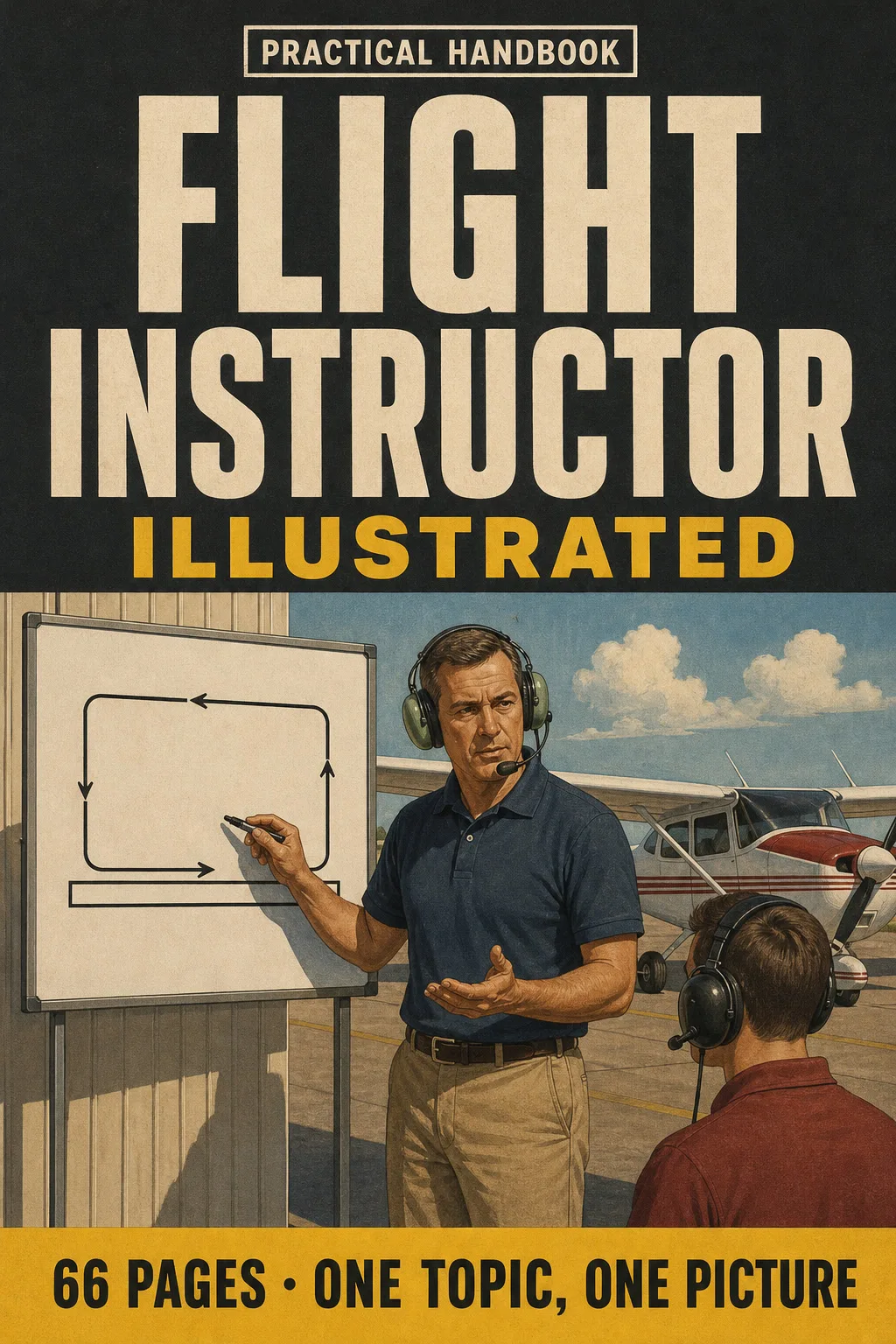
📄 Digital book in PDF · read it on your phone or print it
See it, then explain it like an instructor. Levels of learning, defense mechanisms, the teaching process, load factor, left-turning tendencies, stalls, chandelles, eights on pylons and endorsements: one page each, the drawing first, then what to remember and what to say. 66 illustrated pages.
🔒 Secure checkout · PDF by email · 30-day guarantee
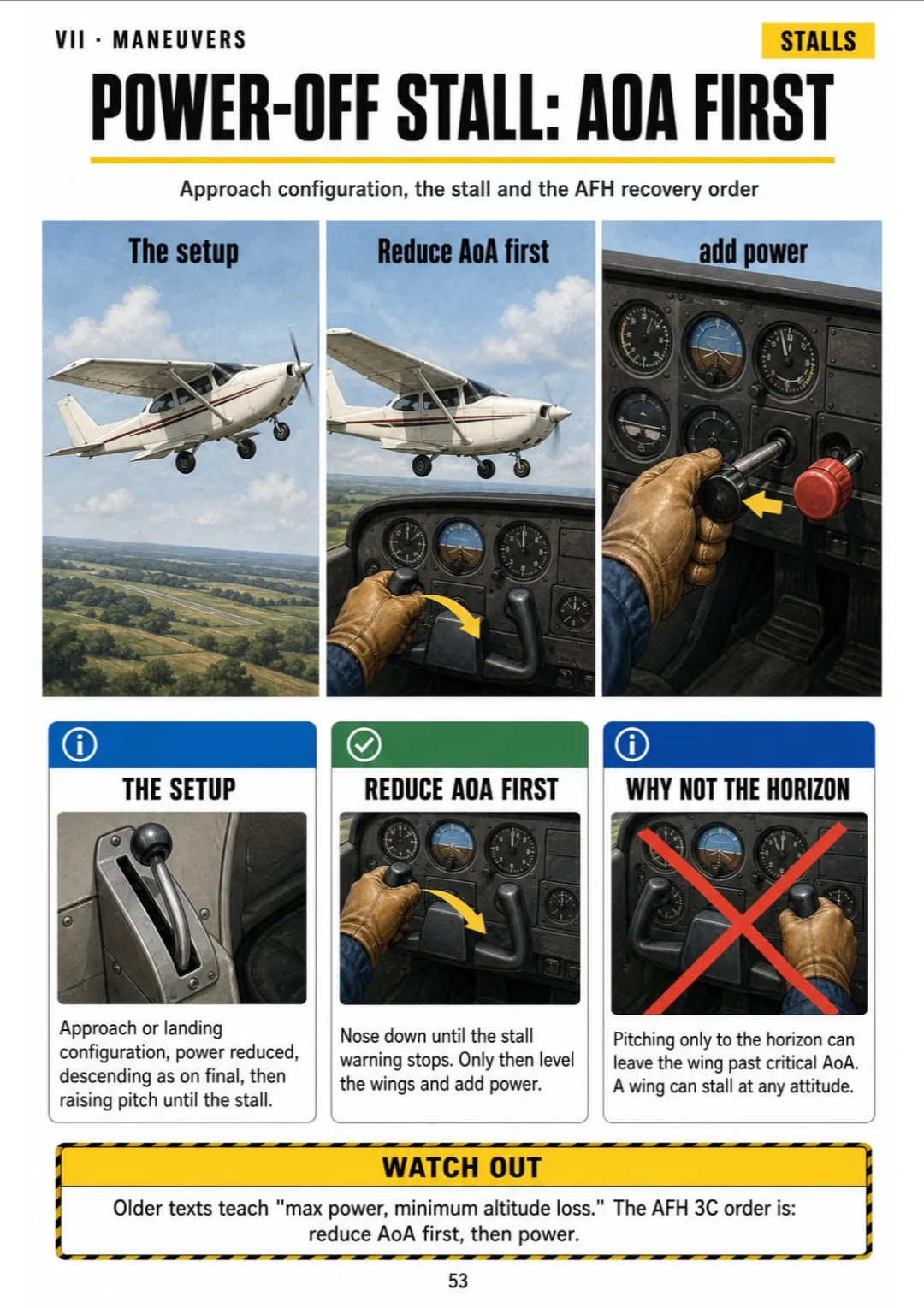
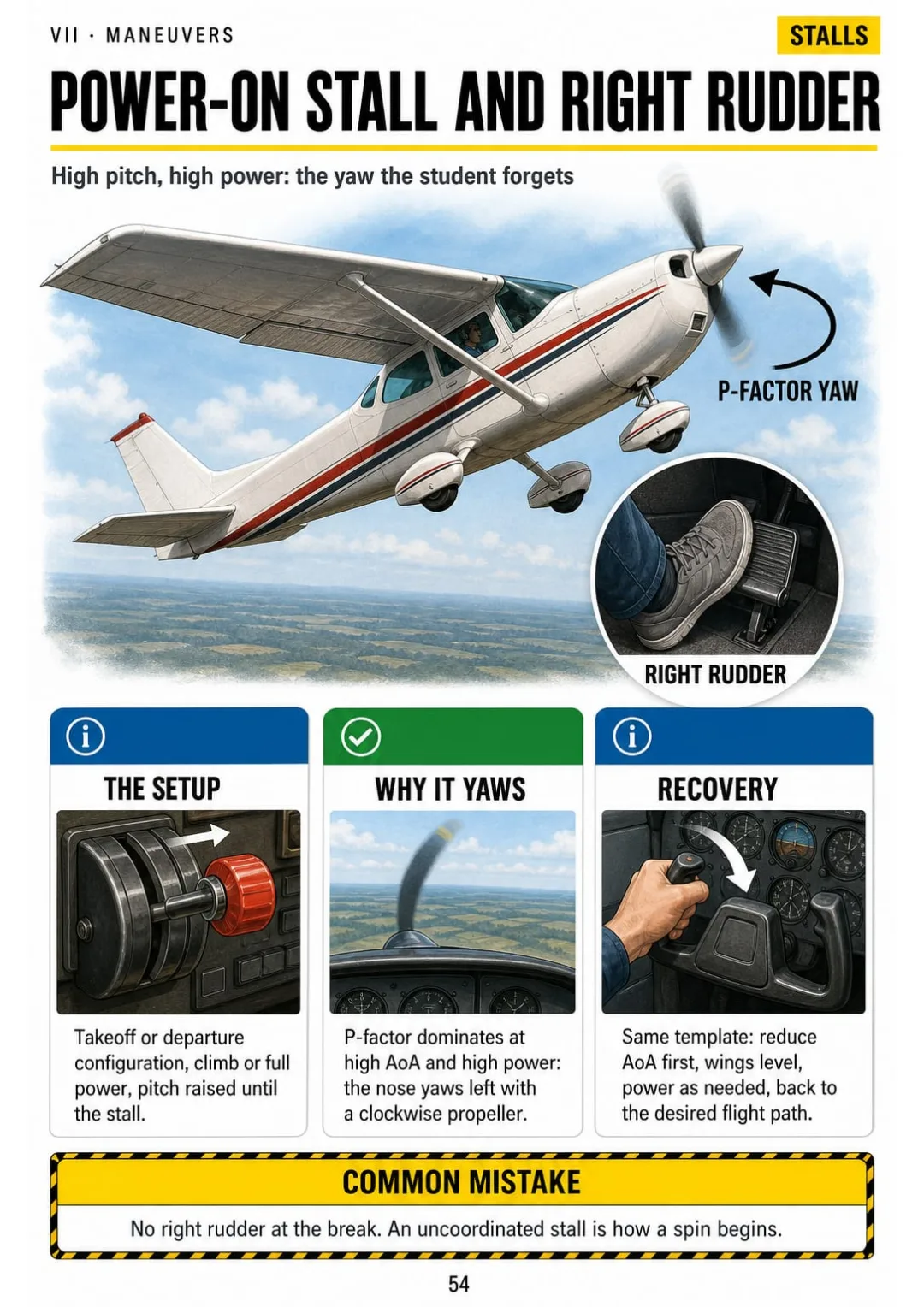
Every page has one big drawing and a box with the numbers, steps and teaching points you need to know:


Swipe to see more →
These are real pages from the book. The table of contents is the full one: 8 parts and 62 topics.
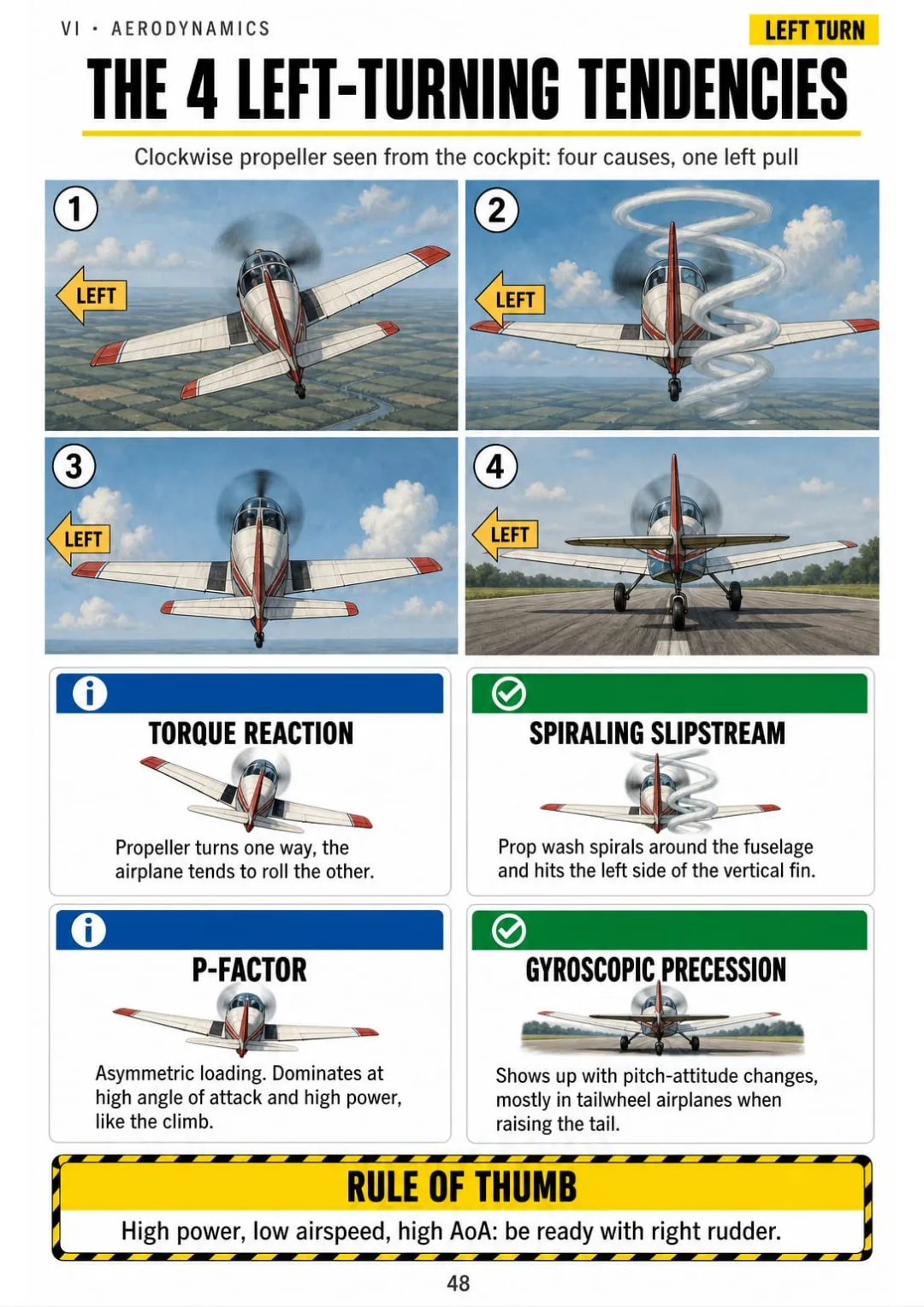
You're in a mock lesson and the examiner asks: “Your student keeps drifting left on the takeoff roll. Explain why.” You know it's the left-turning tendencies. Naming all four and saying when each one matters is where you freeze.
In the handbook, torque, spiraling slipstream, gyroscopic precession and P-factor are four blocks of text, each with its own physics. Nothing ties them together, so by the next morning they blur into one.

In the book, it's one page: the airplane drawn with an arrow for each force, and a box that says when each one matters: torque, slipstream and P-factor at high power and low airspeed, precession only when the pitch changes. You see all four at once.
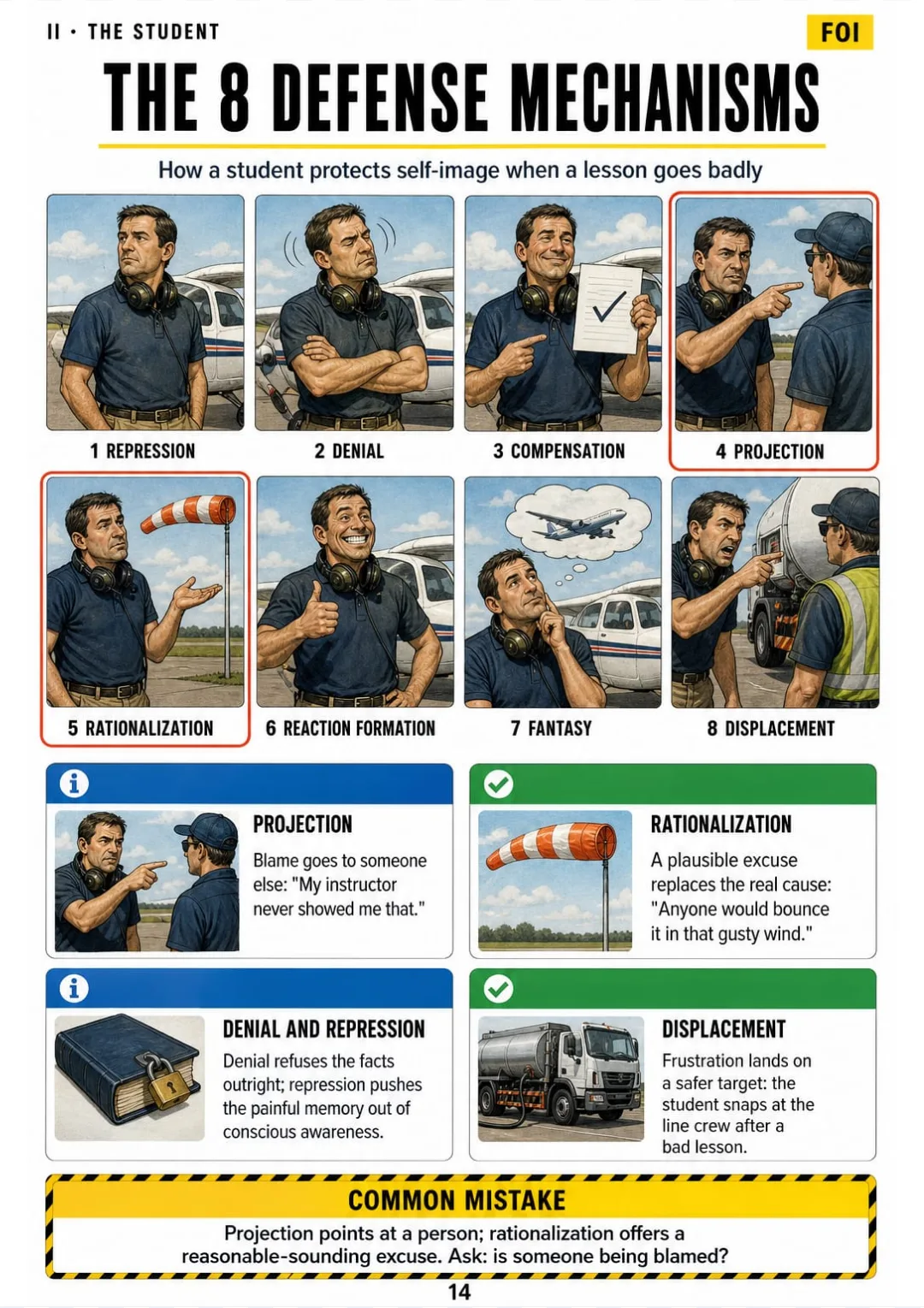
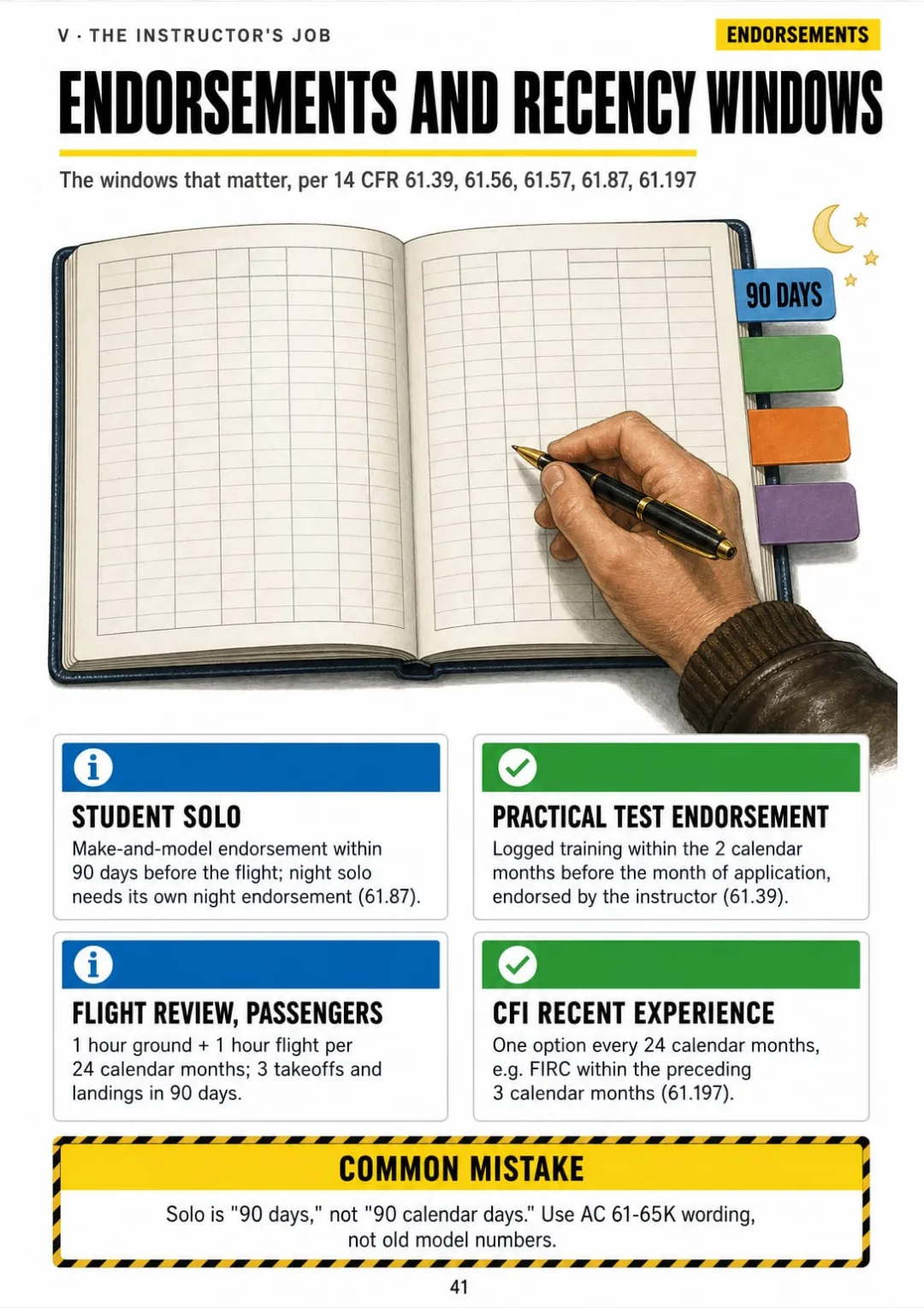
Same with the levels of learning, the defense mechanisms, load factor in a turn, pivotal altitude and the recency windows: each one on its own page.
So when the examiner asks, you sketch it on the whiteboard and explain it like an instructor. No going back to the handbook.

How students learn, the student as a person, the teaching process, assessment and critique, the instructor's job, aerodynamics, teaching each maneuver and checkride prep: 66 pages, all illustrated.
Think of it this way:
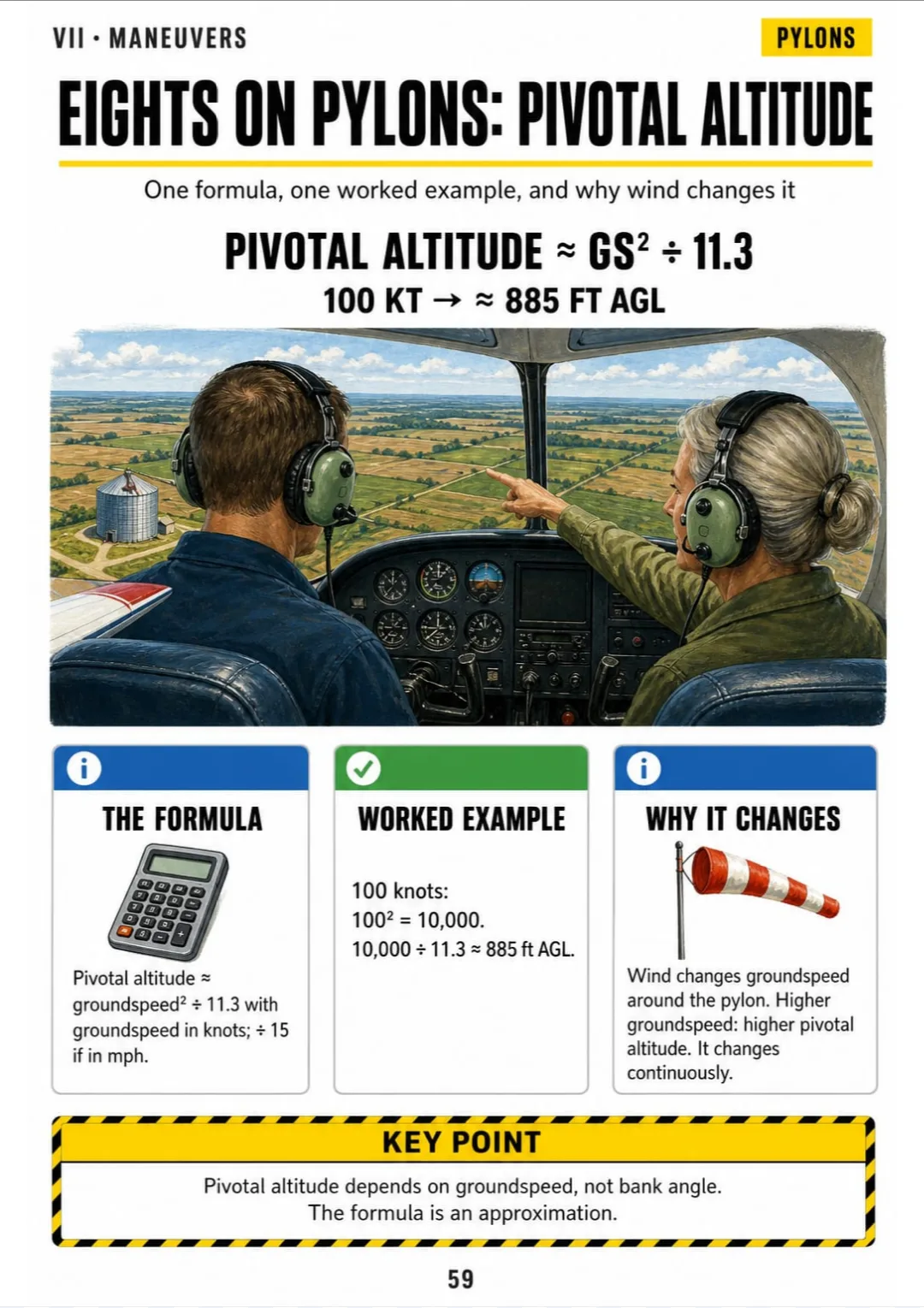
It's checkride day. The examiner leans back and says, “Teach me eights on pylons.” You have to explain pivotal altitude to someone who already knows it cold.
In the book, you open that page and see the pylon drawn from above, the line from your eye along the wingtip, and the box: pivotal altitude ≈ groundspeed² ÷ 11.3, so at 100 knots, about 885 feet AGL. The formula, the picture and what to say, on one page.

Same with the power-off stall, the chandelle and the lazy eight, the 8 defense mechanisms and the 5 hazardous attitudes: each one on its own page.
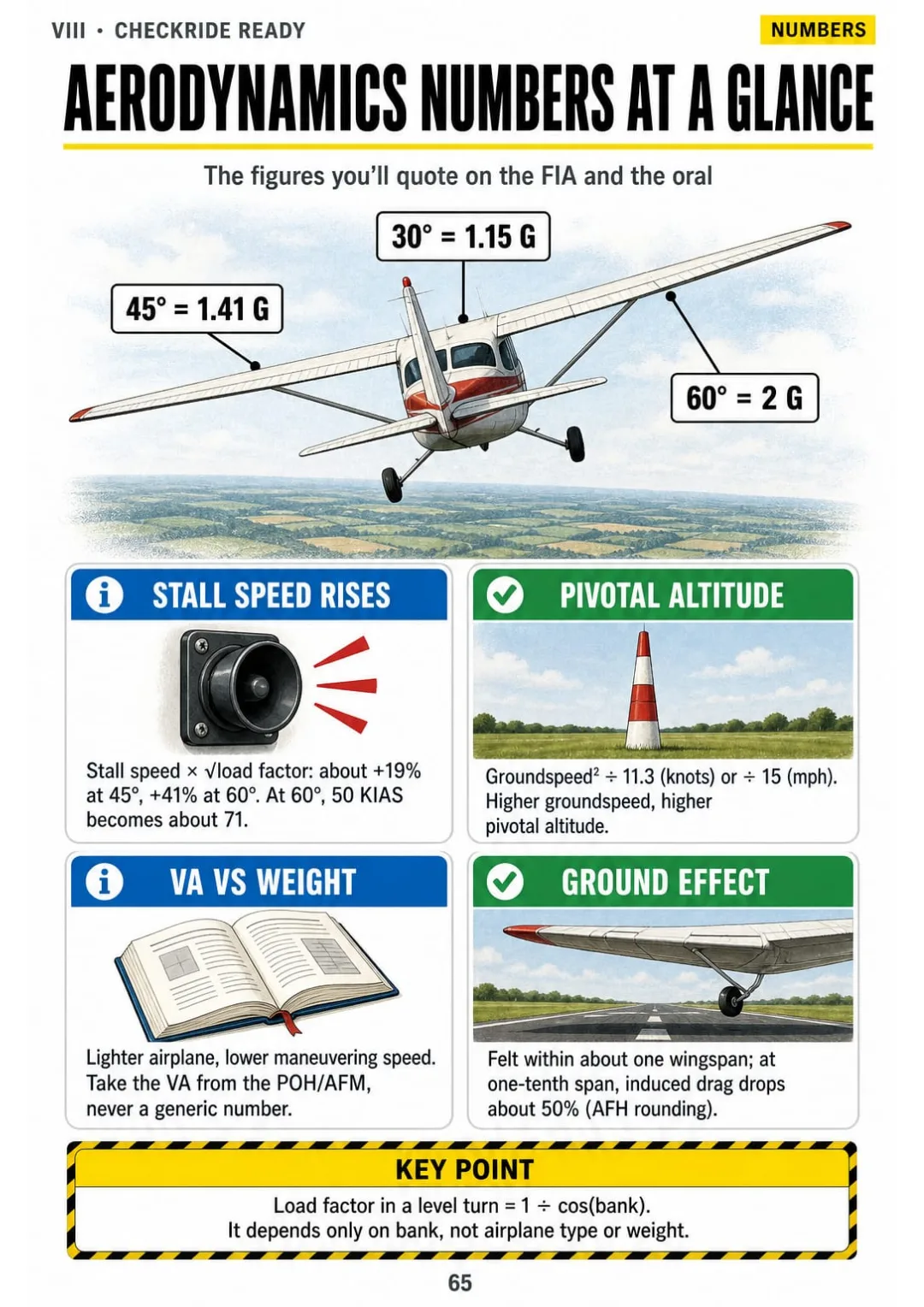
Flight Instructor Illustrated is 8 parts and 62 topics, all drawn, and it ends with a 4-point “Teach me…” script, the FOI terms that get confused and the aerodynamics numbers at a glance.
What you see drawn, you don't have to memorize.
The 4 levels of learning, the 3 domains, the principles of learning, perception, insight, memory, forgetting and learning plateaus.
The 8 defense mechanisms, obstacles to learning, anxiety and stress, motivation, fatigue and the adult learner.
The 4 steps of teaching, building blocks, the lesson plan, objectives, lecture, demonstration-performance, telling-and-doing, questions and scenario-based training.
Traditional vs authentic assessment, learner-centered grading, the qualities and methods of a good critique, oral questions, written tests and item types.
Instructor responsibilities, positive exchange of flight controls, hazardous attitudes, DECIDE, 3P, PAVE, IMSAFE, SRM, CFI privileges and endorsements.
The four forces, angle of attack, load factor, stall speed, maneuvering speed, drag curves, left-turning tendencies, stability, CG, ground effect and density altitude.
Slow flight, power-off and power-on stalls, demonstration stalls, spin awareness, steep turns, chandelle and lazy eight, eights on pylons, ground reference, short and soft field, emergencies.
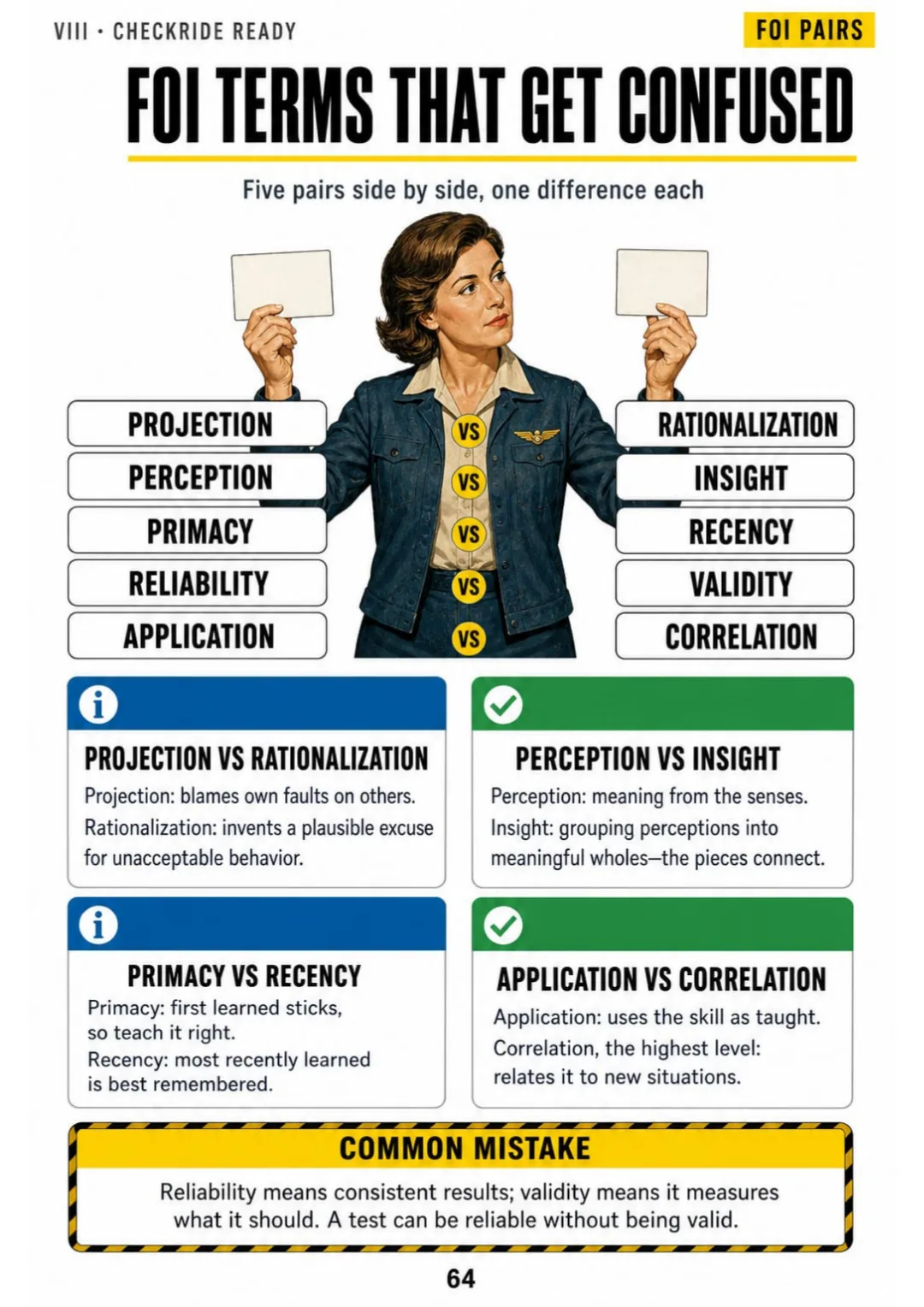
A 4-point “Teach me…” script, the FOI terms that get confused, the aerodynamics numbers at a glance and a checkride day checklist.
At the end of the book: A 4-point “Teach me…” script, the FOI terms that get confused and the aerodynamics numbers on one page.
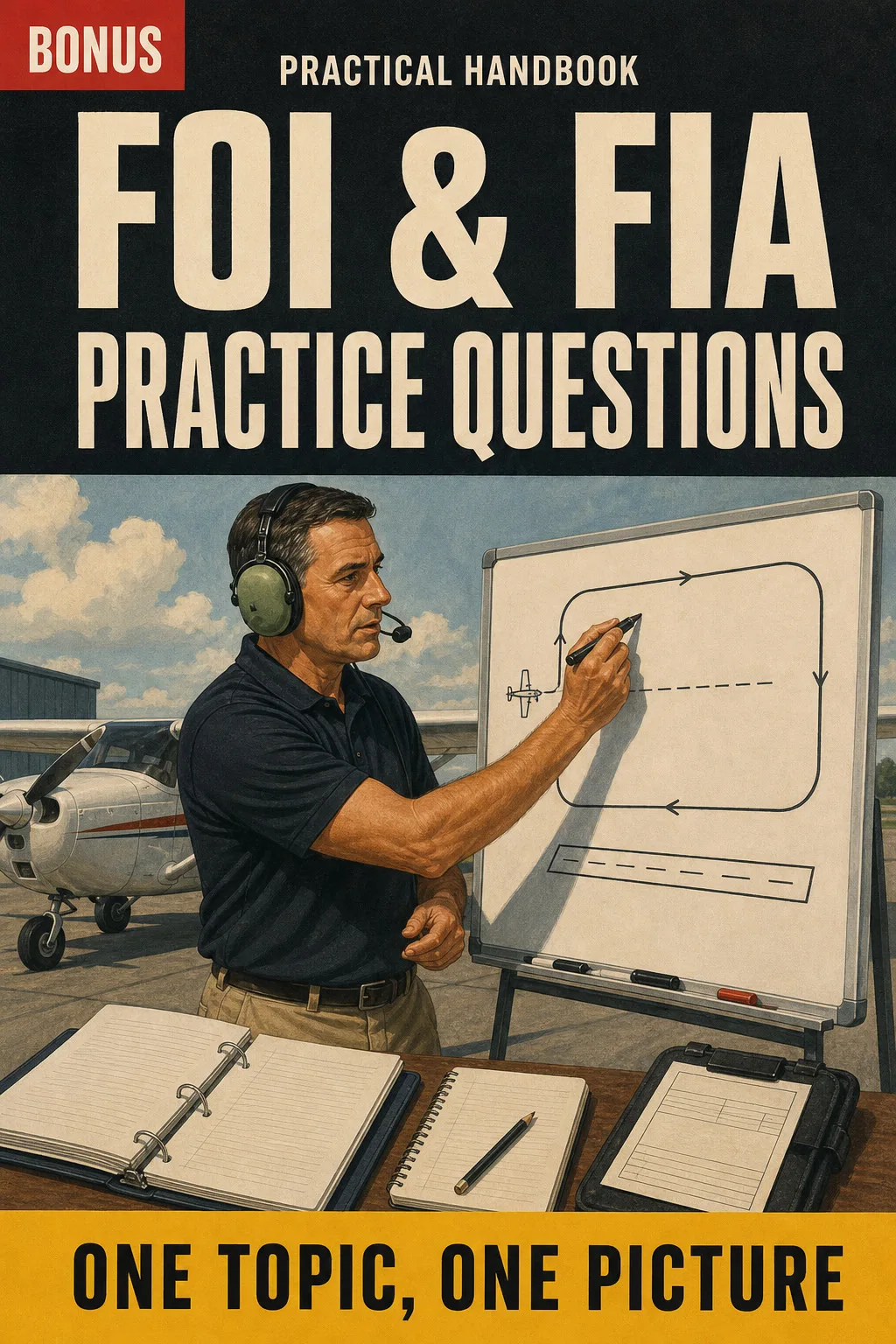
Exam-style questions with the answer explained and the page to review, so you find your weak topics before test day.

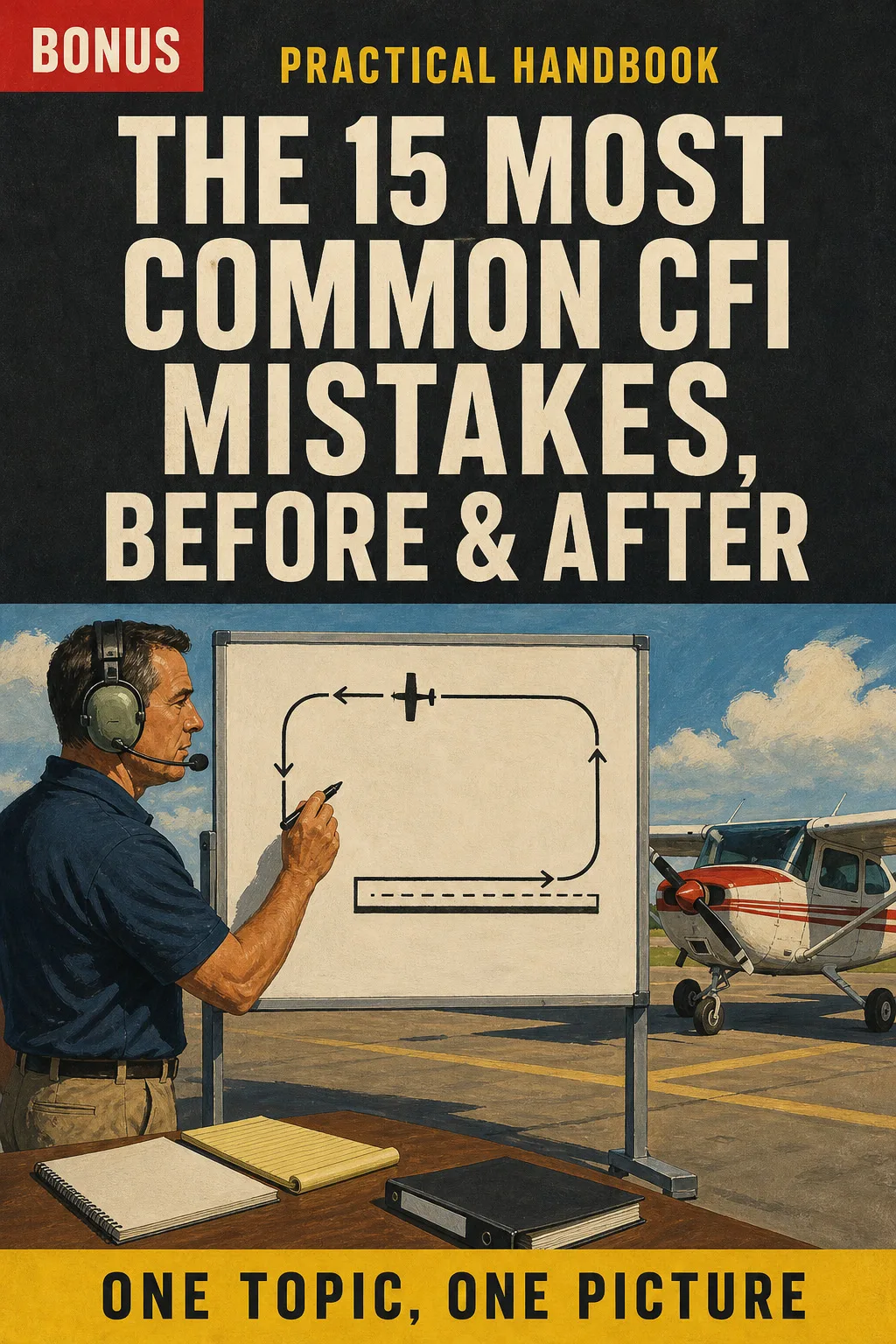
The mistakes new instructors make most often, each drawn wrong and then right, so you don't repeat them in front of the examiner.
📄 This is a digital PDF book sent to your email: nothing is printed or shipped.
PDF by email: We email you Flight Instructor Illustrated as a PDF, together with the two free books. It's a single payment: no installments, no extra charges.
The FOI theory and the aerodynamics become drawings you can review at a glance, one topic per page, instead of chapters that fade by morning.
Every maneuver is drawn as a flight path with its teaching points, so when the examiner says “teach me,” you know what to say and in what order.
A page to sketch from when a student asks why stall speed goes up in a turn, plus the endorsement and recency windows to keep in your flight bag.
📄 This is a digital PDF book sent to your email: nothing is printed or shipped.
Try Flight Instructor Illustrated for 30 days, bonus books included.
We refund everything if the file won't open, if the book isn't what you see here, if you were charged twice or if the email doesn't arrive. Just email us.
You pay once. No subscriptions.
Yes. It doesn't teach you to fly: it shows you how to explain and teach what you already fly, plus the FOI theory most pilots never studied. It covers the FOI and the instructing side of the FIA: aerodynamics, every checkride maneuver, endorsements and recency. Weather, airspace and chart work are not in it, so keep your usual FIA prep for those.
From the current FAA publications: Aviation Instructor's Handbook (FAA-H-8083-9B), Airplane Flying Handbook (FAA-H-8083-3C), Pilot's Handbook of Aeronautical Knowledge (FAA-H-8083-25C), the Flight Instructor for Airplane ACS (FAA-S-ACS-25), 14 CFR Part 61 and AC 61-65. Every number, step and window in the book is checked against them.
No. It's an independent illustrated study book based on those FAA publications. It isn't published or endorsed by the FAA.
No. It's study material. You still need training and endorsements from an authorized instructor, and spins and emergencies always follow the POH/AFM and instruction in the airplane.
The app tells you if you picked the right answer. This book shows you why, with one drawing per topic you can sketch on a whiteboard, and how to teach each maneuver when the examiner says “teach me.” The practice questions in the bonus book are written for this book, in the style of the knowledge tests, with the answer explained and the page to review. They aren't official questions.
The book and the 2 bonus books come as a PDF by email, to the address you enter at checkout.
No. It's a one-time payment.
Yes. The PDF is printable, so you can print the pages you need and keep them in your flight bag or use them in a briefing.
You have 30 days. We refund everything if the file won't open, if the book isn't what you see on this page, if you were charged twice or if the email doesn't arrive: just email us.
No more rereading the handbook with nothing sticking.
The left-turning tendencies, drawn and done.
You walk into the checkride knowing where everything is.
Drawings make studying faster.
The book is right below.
One-time payment: US$ 27 · Guarantee: 30 days · PDF by email
YES, I WANT FLIGHT INSTRUCTOR ILLUSTRATED FOR US$ 27📄 This is a digital PDF book sent to your email: nothing is printed or shipped.